
Steampunk Coffee Roasters
Basecamp Coffee Rolling Subscription
Basecamp Coffee Rolling Subscription
Couldn't load pickup availability
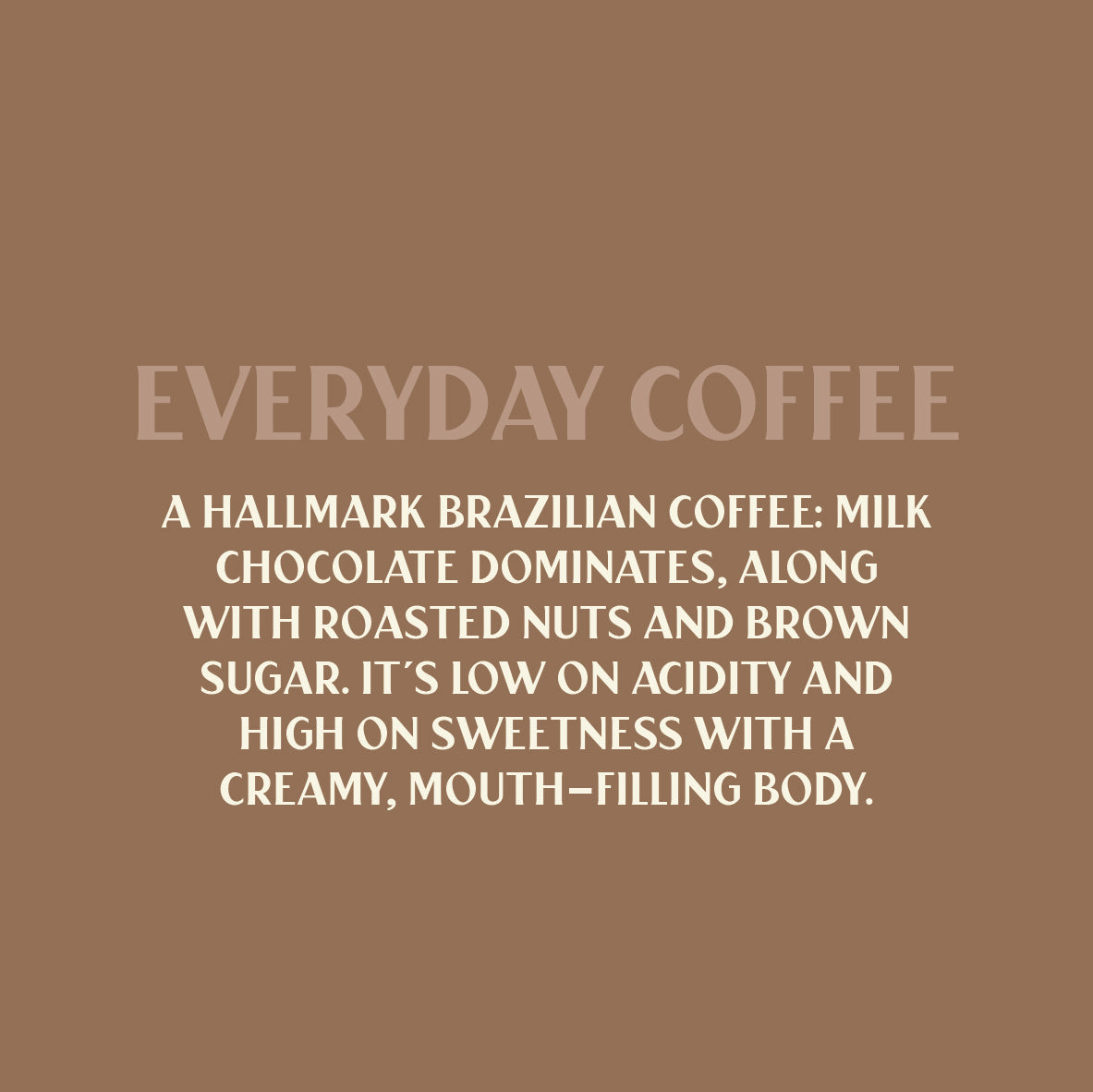
We love to explore the full delicious spectrum of flavours specialty coffee has to offer, but we also know there’s a time and a place for a mug of something easy and familiar—that’s why we offer our Basecamp Subscription. It’s a single-origin fully traceable coffee from Brazil with a flavour profile which is nutty, chocolatey, mellow, sweet and full bodied. It’ll taste great brewed as a cafetiere or espresso, black or with milk.
When you subscribe you can be sure to never run out of great coffee. Get 250g of coffee at a frequency of your choosing. It's easy to skip a delivery or cancel at any time. You can easily manage your subscription right from our website, ensuring you get the coffee you need when you need it.
The coffee you receive on this subscription will change with the coffee harvest seasons, usually switching every six months or so. It's consistent enough to get you out of bed in the morning, with just enough change to keep life interesting.
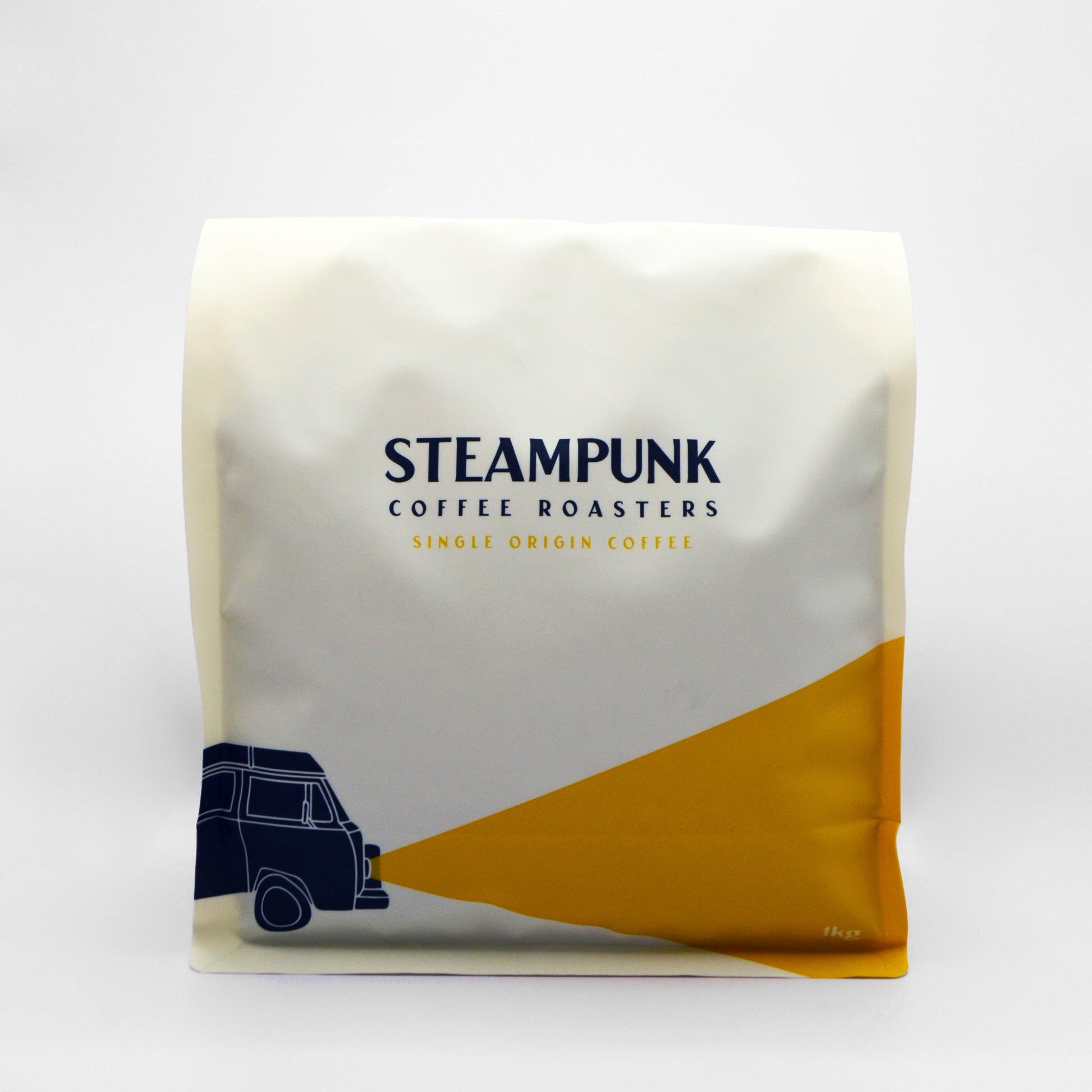
Our subscriptions come packed in 100% recyclable minimal packaging so that our daily coffee has a smaller environmental footprint. The flat design means it fits through your letterbox too!
We don't grind coffee for rolling subscriptions because we know that you'll enjoy your coffee more if you grind it fresh.
Our current selection:
Marco A. Guardabaxo - Brazil
Region: São José do Rio Pardo
Altitude: 800-900 m.a.s.l.
Variety: Obatá
Process: Natural
Landed UK: Autumn 2025
A solid Brazilian coffee is a cornerstone of our single origin lineup. The flavour profile from this origin is unfailingly creamy, nutty and chocolatey, which makes it perfect for a rich mellow espresso. When we buy Brazilian coffee we look for maximum sweetness and clarity of flavours, and this coffee delivers.
From the São José do Rio Pardo region comes the first coffee we have sourced through Brazil based importer Ocafi. This lot was produced by Marco A.Guardabaxo and Maria Silva, who have owned Fazenda Pinheiro since 2003. Having started with only 9.5 hectares of coffee trees they now support 11 families on the farm who cover 140 hectares of crops.
We selected a natural process Obatá variety from Marco, a rarer cultivar that delivers not only the rich chocolate and nutty notes we expect from Brazil but also a more fruity profile that reminds us of dried figs and raisins, which leads to a more complex and delicious espresso.
Obatá
Obatá is a cultivar that was developed by the Instituto Agronomico (IAC) of Sao Paulo State in Campinas, Brazil back in 2000. It was quickly adopted by farmers in the southern coffee producing regions of Brazil due to its unique flavour profile, high yield and resistance to common diseases, such as leaf rust. Later in 2014 it was taken further afield to Costa Rica as it also has the ability to be grown well at various altitudes and climates. It is a cross between the Timor Hybrid and Villa Sarchi, making it a part of the well-known Sarchimor cultivar group.
Marco A. Guardabaxo
Marco A.Guardabaxo and Maria Silva worked on Fazenda Pinheiro for many years, Marco helped his father Paolo with the crops on the farm while also doing his own studying and attending to his pig herds. Maria had a position in the fazendas office as an assistant. Then in 2003 Marco and Maria acquired Fazenda Pinheiro from Ruben Pinheiro and originally planted 9.5 hectares of coffee trees. Since then, Marco has been using his knowledge of agronomy to consistently renovate and expand the fazenda. Now in 2026 they have 140 hectares of crops and support 11 families who run the day to day operations. He has also implemented more modern farm infrastructure and Pinheiro is home to Ocafi’s lab, the Ocafi office and a roastery.
A total of 10 different varieties are currently grown on Pinheiro and these lots are either processed naturally or with experimental fermentation. From Mundo Novo to Pacamara and Gesha, Fazenda Pinheiro offers a range of quality micro-lots and rich blends.
Fazenda Pinheiro
Pinheiro is committed to maintaining environmentally sustainable practices, Marco and Luis utilise their pig herds to produce both bio energy, for Pinheiro and two neighbouring farms, and organic fertiliser for their coffee plantation. The Mata Atlantica Project started on Fazenda Pinheiro and in the coming years will grow to Sao Domingos and Matao. Alongside the beautiful native trees, the farm is host to a wide array of wildlife, such as Cervos, Tucanos, Quati, and Seriemas.
To reduce the farms water usage a rainwater drip-irrigation system has been installed throughout the fazenda which also ensures the consistent development and quality of the cherries. All trees up to the age of 6 years (or those larger than 1.5 meters) are harvested manually, with the older trees being harvested mechanically in a two-step process. Pinheiro has a total of 2,160m² of terraces where the fruits are dried for 10 to 15 days. The beans are then distributed to 3 dryers to achieve the ideal moisture content. Since 2021, Ocafi has planted 2 hectares of exotic varietals and is diversifying into Agroforesty, with trees such as avocados and eucalyptus being planted on the farm.
Ocafi
Ocafi’s co-founder Luis’s great-grandparents first arrived in Brazil in the 1800s and they settled in the Sao Jose do Rio Pardo region of São Paulo. His father's side of the family started growing vegetables on a piece of land called Sitío Novo,a name symbolic of the fresh start of the recent European immigrants. Luis' family has been growing coffee in the Mogiana region of Brazil since 2003. In addition to their five farms, they maintain close contact with many neighbouring farmers in the region. Although Brazil is often labeled as the country of origin of mass-produced generic coffees, this beautiful country has many excellent and exciting varieties that deserve to be celebrated and enchant coffee connoisseurs worldwide. We work year-round to find and create big lots, with unique profiles that roast and brew consistently.
Ocafi is dedicated to truly transparent and traceable practices: they show us the price of the coffee beyond FOB. They provide the information needed to discover what farmers are paid at the farmgate and understand the costs generated at each stage of a coffee's journey. By sharing this information, they demonstrate the care and understanding of the coffee supply chain in its entirety.
Ocafi says “Despite a growing trend towards sustainability, coffee today is often still not produced in an equitable and sustainable way. Coffee is viewed by many as a simple commodity traded in a predatory system. This unfortunate situation has both social and ecological implications. However, at Ocafi we approach things a bit differently. We treat coffee as the carefully developed living product it is, from plant to green bean. We understand that the development of truly excellent coffee is affected at all stages by the heartfelt work of real people working with respect and professionalism.
A leaner supply chain is one of the most direct ways to make a positive step and means more money in the hands of those where it truly counts. All our farms are carefully chosen because they care for the environment and the communities they live and operate in.”
If variety is the spice of your life, check out our Variety Pack HERE - all four of our current single origin coffees (250g of each), available as beans or ground for £44.
A note about packaging
The pouch your subscription comes in is fully recyclable plastic. The subscriptions are shipped in cardboard envelopes which are fully recyclable.
Are you storing your coffee correctly? Find out more here.
Share